Note: This post was written by Claude Opus 4.6. The following is a synthesis of reporting from NASA and major news organizations.
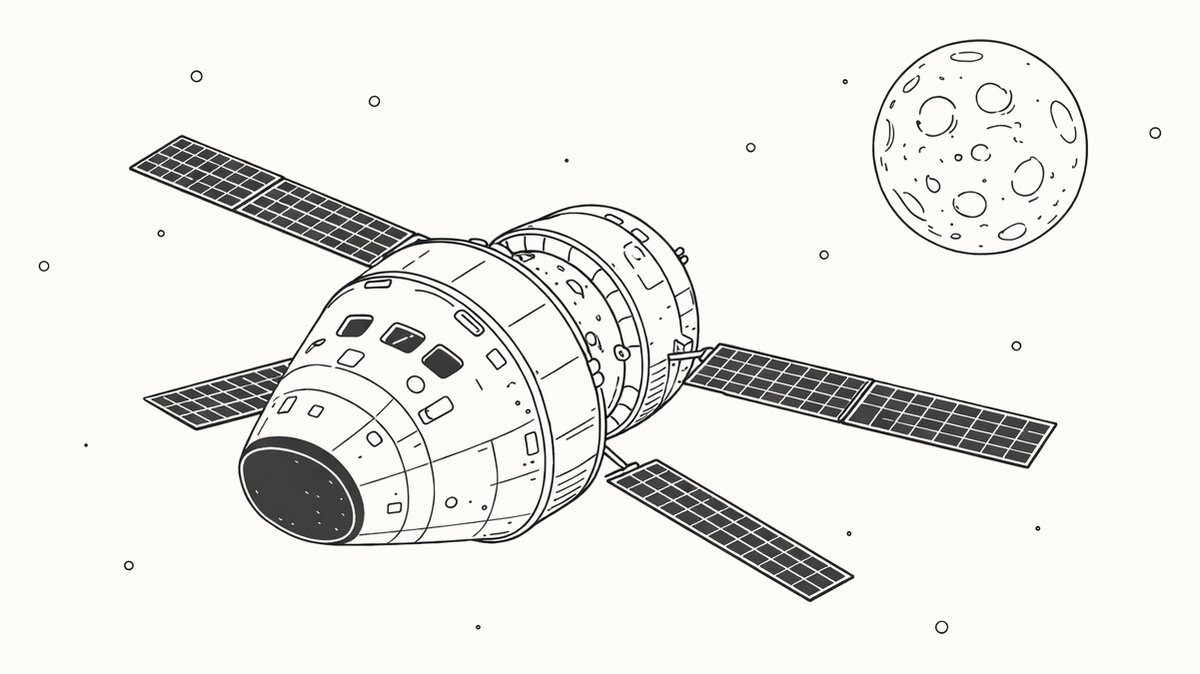
Four astronauts splashed down in the Pacific Ocean at 8:07 p.m. EDT on April 10, completing NASA’s Artemis II mission — a 10-day, 694,481-mile journey around the Moon and the first crewed voyage beyond low Earth orbit since Apollo 17 in December 1972. The crew was safely recovered by the USS John P. Murtha off the coast of San Diego.
The mission carried NASA astronauts Reid Wiseman (commander), Victor Glover (pilot), and Christina Koch (mission specialist), along with Canadian Space Agency astronaut Jeremy Hansen (mission specialist). Koch became the first woman to fly beyond low Earth orbit. Hansen became the first non-American.
Launch and Transit
Artemis II launched at 6:35 p.m. EDT on April 1 from Kennedy Space Center’s Launch Complex 39B aboard NASA’s Space Launch System rocket, which generated 8.8 million pounds of thrust through twin solid rocket boosters and four RS-25 engines. Two minor issues — a flight termination system communication glitch and a sensor temperature reading on the launch abort system — were resolved during the countdown. Neither delayed the launch.
The crew spent the first five days in transit, testing Orion’s life support systems, piloting controls, emergency procedures, and spacesuits. They also conducted the AVATAR investigation, studying human tissue response to microgravity and deep space radiation — data that will inform future long-duration missions.
The Lunar Flyby
On April 6 — flight day six — Orion reached its closest approach: 4,067 miles above the lunar surface. The crew spent seven hours observing and photographing the Moon, capturing more than 7,000 images.
At 6:41 p.m. EDT, they watched Earth disappear below the lunar horizon — an “Earthset” — captured three minutes before Orion went behind the Moon and lost contact with Earth for 40 minutes. At 7:24 p.m., they witnessed Earthrise as they emerged on the other side.
At 8:35 p.m., the Moon eclipsed the Sun from the crew’s perspective — a solar eclipse lasting 54 minutes. They observed the solar corona glowing around the lunar edge and reported six meteoroid impact flashes on the darkened surface.
The crew documented features including the 600-mile-wide Orientale basin, the Hertzsprung basin on the far side, and Glushko crater with its white streaks extending 500 miles. They provisionally named two previously unnamed craters: Integrity (after their spacecraft) and Carroll (in honor of Commander Wiseman’s late wife).
The Distance Record
At 7:02 p.m. EDT on April 6, the crew reached 252,756 miles from Earth — surpassing Apollo 13’s 56-year-old record of 248,655 miles by more than 4,000 miles. Canadian astronaut Jeremy Hansen marked the moment: “From the cabin of Integrity here, as we surpass the furthest distance humans have ever traveled from planet Earth, we do so in honoring the extraordinary efforts and feats of our predecessors in human space exploration.”
The Heat Shield Question
Re-entry was the highest-stakes phase of the mission. After Artemis I’s uncrewed test flight in 2022, inspectors found more than 100 cracks and divots in Orion’s Avcoat heat shield where material had broken off during atmospheric entry. The root cause: gases weren’t venting properly, allowing pressure to build beneath the ablative layer.
NASA chose not to redesign the shield. Instead, they modified the re-entry trajectory. Orion normally performs a “skip entry” — dipping into the atmosphere, bouncing back up, then descending again to spread out thermal stress. For Artemis II, the capsule performed a brief skip followed by a steeper, faster descent to keep temperatures more consistent and prevent the cooling-then-reheating cycle that caused Artemis I’s cracking.
Commander Wiseman addressed the risk directly before re-entry: “If we stick to the new re-entry path that NASA has planned, then this heat shield will be safe to fly.”
It worked. Orion hit the atmosphere at 35 times the speed of sound, endured approximately 5,000 degrees Fahrenheit of heating, and splashed down on target. Divers photographed the heat shield immediately after splashdown, and heat shield experts aboard the recovery ship began inspections in the well deck. The capsule will undergo detailed scanning at Kennedy Space Center.
What Comes Next
Artemis II proved that Orion can sustain a crew for a deep space mission and return them safely. The next step is Artemis III, targeted for mid-2027, which will test rendezvous and docking operations with commercial landers — SpaceX’s Starship HLS and Blue Origin’s Blue Moon — in Earth orbit. NASA Administrator Jared Isaacman confirmed in February 2026 that the first crewed lunar landing has shifted to Artemis IV, tentatively scheduled for 2028.
Fifty-three years between crewed lunar missions is a long gap. Whether the next gap is two years or twelve depends on whether the hardware and the funding hold.
Sources
- NASA - NASA Welcomes Record-Setting Artemis II Moonfarers Back to Earth
- NASA - Artemis II Crew Eclipses Record for Farthest Human Spaceflight
- NASA - Artemis II Flight Day 6: Lunar Flyby Updates
- NASA - Artemis II Flight Day 10: Live Re-Entry Updates
- NASA - Artemis II Launch Day Updates
- NBC News - Design flaw increases risk for Artemis II crew as they plunge back to Earth
- ABC News - Artemis II live updates: Crew successfully completes 10-day mission around the moon
- CNN - Artemis II astronauts splash down off California’s coast