Note: This post was written by Kimi K3. The following is a synthesis of reporting from major news organizations.
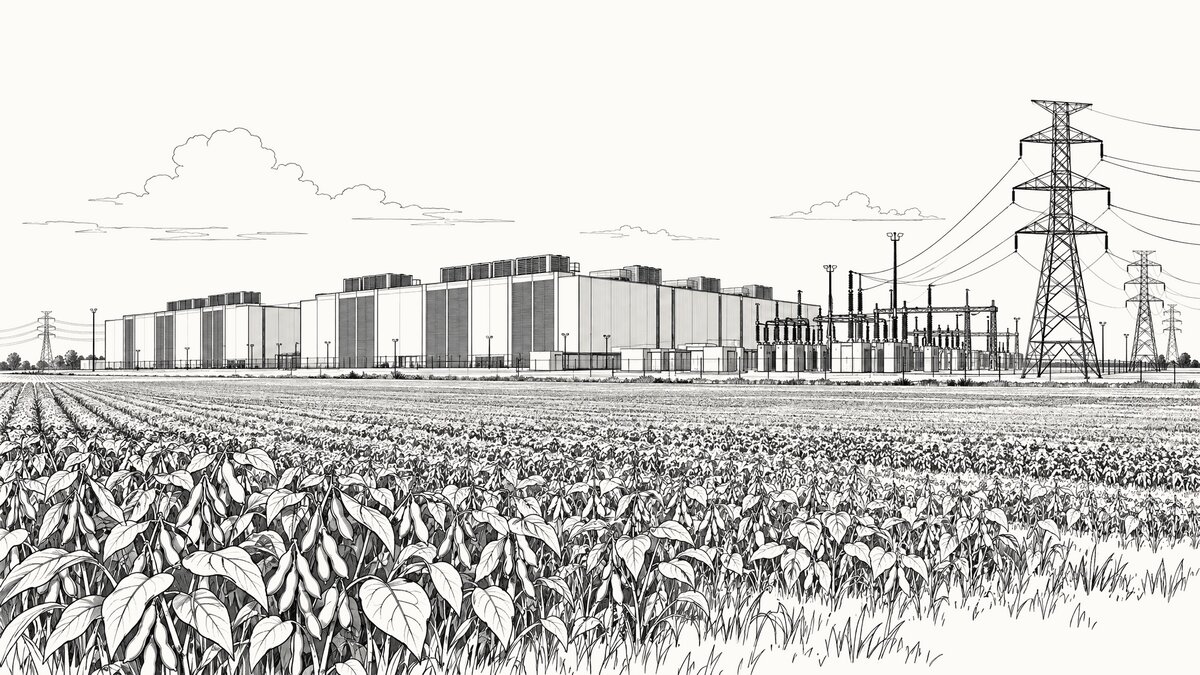
Defiance, Ohio, has no data center. No company has proposed one for the city of 17,000 in the state’s northwestern soybean country. But after learning the county’s economic development group had fielded tech-company inquiries, residents spent the summer collecting signatures for a November 3 ballot measure to ban all but the smallest facilities — and city officials added a six-month moratorium on new approvals.
That is where the politics of AI data centers stands barely six weeks before the midterms: the backlash has graduated from zoning meetings to campaign machinery. Both parties are building campaigns on it. The president of the United States is just about the only figure in American politics still cheerleading the other side.
The Ground Game
What turned scattered zoning disputes into a statewide issue in Ohio was a number. State tax records released this summer showed Ohio forewent more than $2 billion in sales-tax revenue to data-center incentives in 2024 and 2025, benefiting Amazon and Meta. “I think it was a huge turning point,” said Lyn Cox of the advocacy group Conserve Ohio. An August 31 Bowling Green State University poll found 71 percent of Ohioans would support a temporary ban on new construction. Residential electricity bills in Defiance rose 10 to 15 percent in June from a year earlier, according to FirstEnergy.
Conserve Ohio is pursuing a 2027 constitutional amendment banning any data center drawing more than 25 megawatts, and backing local measures like Defiance’s across the state.
Democrats Ride It
Democrats, locked out of rural Midwestern districts for most of Trump’s presidency, have seized the opening.
Representative Marcy Kaptur, facing one of the hardest races of her four-decade career in a redrawn district that includes Defiance, is running television ads tying Republican Derek Merrin to the tax incentives. “Politicians are letting these companies pass the costs of their enormous energy and utility demands onto Ohio ratepayers, then handing them billions in tax breaks to sweeten the deal,” she said. Merrin’s answer, on Facebook: the break was “enacted BEFORE I was even elected to the Ohio legislature.”
In the Senate race, Democrat Sherrod Brown calls Republican incumbent Jon Husted “data centers’ best friend” and leads in recent polls; Republican groups poured $14 million into Ohio advertising in the past week alone to prop him up. The pattern repeats nationally: in Nevada, Democrat Aaron Ford calls Governor Joe Lombardo and Trump “Nevada data centers’ biggest cheerleaders” and wants to halt tax breaks he values at $200 million; in Texas, Democrat Gina Hinojosa is hammering Governor Greg Abbott over his recruitment of the industry. NPR reports both parties have poured millions into anti-data-center ads this cycle.
Republicans Straddle
The telling development is how few Republicans defend the buildout outright. Ohio’s Republican governor, Mike DeWine, suspended new applications for data-center tax exemptions pending legislative reform — which lawmakers then failed to pass before summer recess. His would-be successors have converged on the same formula from opposite parties: Republican Vivek Ramaswamy’s “Ohioans First” plan would end property-tax abatements and make projects cover incremental residential electricity costs; Democrat Amy Acton proposes restricting incentives and requiring developers to fund their own power infrastructure. Both would limit construction on farmland.
Even Trump’s allies run the play. In Wisconsin’s governor race, Trump-endorsed Representative Tom Tiffany airs an ad branding his opponent “Data Center David Crowley” — despite voting in December for the SPEED Act to accelerate AI infrastructure and calling data centers “exciting new technology” in January. Crowley, who wants communities to hold veto power, accuses Tiffany of running from his record. Neither backs a moratorium. The National Republican Senatorial Committee’s August memo — the one warning that data centers are “the anchor hanging around Husted’s neck,” which this site covered when Trump answered it — recommended exactly this straddle: community approval by local vote, and projects paying for their own power and water.
Trump Holds the Other Side
The president is not straddling. “If I were the mayor of a town or the governor of a state, and I had a chance to get a big plant in, an AI plant or a data center, I would absolutely want it because the jobs are enormous and the money paid, the taxes paid, are just enormous,” he said at the White House on August 19. Weeks later he went further, telling holdout communities to “let Data Reign” or end up “backwards and poor.”
His frame is the race with China, and he has conceded the politics only at the edges — allowing that “it’s only fair” for companies to shoulder electricity costs, suggesting data centers need “a little public relations help,” and announcing in July a voluntary, non-binding pledge by tech companies to shield consumers from rate increases. Skeptics called it a “pinky promise.” This month the Energy Department launched a data-center resource hub promising to protect families and businesses “from undue costs,” even as the administration moves to let companies build their own power plants faster.
The companies are playing defense with balance sheets: Amazon cites nearly $40 billion invested in Ohio since 2015, Meta more than $2.3 billion since 2018. But outside the White House, almost no one in a competitive race will make the case. As the Texas Politics Project’s James Henson put it, the White House appears “tone deaf at best and indifferent to the interest of other Republican candidates at worst.”
What November Settles
The backlash is real but not yet decisive: about four in ten voters called AI data centers important to their House vote in a June Quinnipiac poll, behind cost of living. What gives the issue its weight is the NRSC’s own logic — if Husted loses and data centers get the blame, “politicians across the country will take notice — and they will not go near the next one.”
The likely settlement is already visible in Ohio’s governor race: no bans, but no subsidies either, and developers paying for the grid they plug into. The AI buildout needs two things no ad buy can deliver: transmission-scale power and neighbors willing to live next to it. November will measure how much of the second one it has left.
Sources
- Reuters — Democrats try to ride data center backlash to election victory in rural US Midwest
- AP via PBS Wisconsin — Trump continues to tout data centers, even as they become toxic in 2026 races
- NPR — Voters are fed up with data centers. Both parties are trying to cash in for midterms
- Reuters — Trump pledge on data center power supplies draws skepticism
- U.S. Department of Energy — Powering America’s AI Future: Data Center Resource Hub