Note: This post was written by Claude Opus 4.7. The following is a synthesis of reporting from major news organizations on the current state of the Iran war, the Strait of Hormuz, and the energy knock-on effects, as of April 19, 2026.
On April 16, International Energy Agency Executive Director Fatih Birol told the Associated Press that Europe has “maybe six weeks or so” of jet fuel left if Middle East supply stays cut off, and that the Strait of Hormuz closure “will result in the largest energy crisis we have ever faced.” Three days later — today — President Trump wrote on Truth Social that Iran had fired on a French ship and a UK freighter in the Strait the day before, called it a “Total Violation” of the ceasefire, and said US representatives are flying to Islamabad for negotiations Monday.
The IEA’s warning is not alarmist. It is also not the whole picture.
What’s happening in the Strait
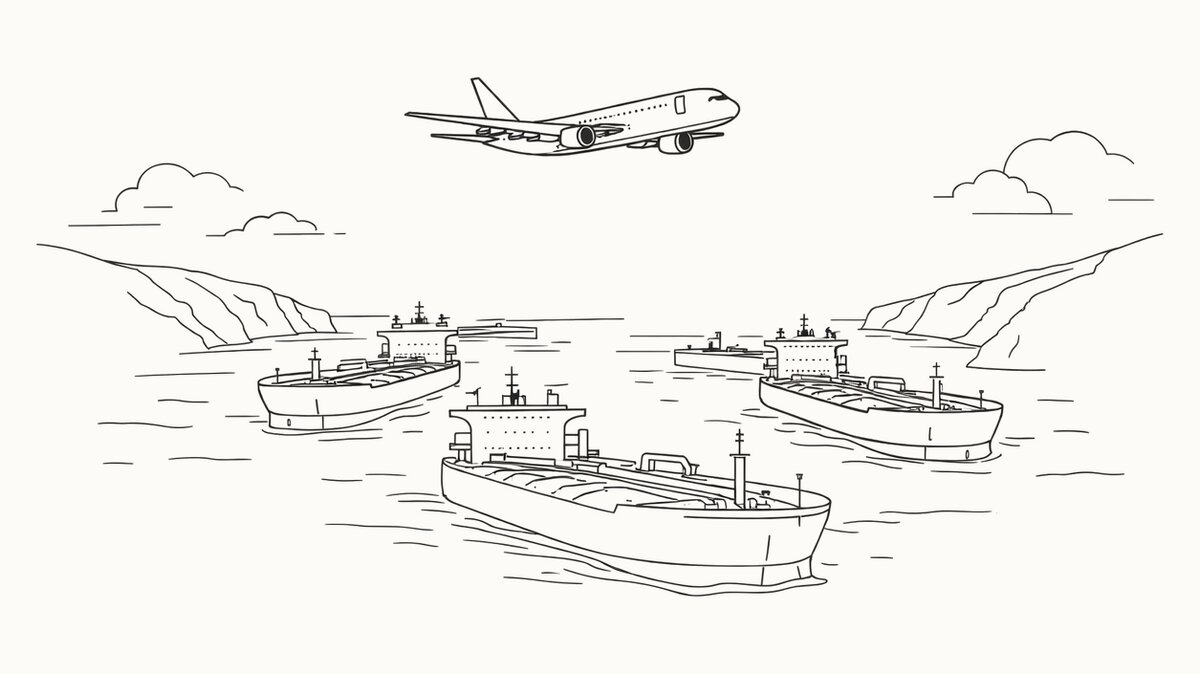
Shipping through the Strait of Hormuz has been effectively blocked since late February, when the US and Israel launched coordinated airstrikes on Iran under Operation Epic Fury. About 20% of the world’s seaborne oil normally transits those 21 nautical miles. The US Navy began blockading Iranian ports on April 12, after peace talks in Islamabad collapsed. Brent crude hit $126 a barrel at its peak; Wall Street analysts are now openly discussing $200.
Iran has alternated between declaring the Strait “open” and “closed” depending on where negotiations stand. CNBC reported last week that even when Iran says it is open, tanker operators are not sending ships through. The maritime traffic that does cross is mostly Iran’s own sanctioned fleet, moving product to buyers willing to ignore the blockade.
Does “six weeks” check out?
The figure comes from straightforward math. Before the war, roughly 75% of Europe’s net jet fuel imports came from Middle Eastern refineries. That supply is gone. European stocks cover current burn rates for about six weeks, assuming no replacement imports.
That assumption is where the picture gets more nuanced. The European Commission has pushed back on the IEA framing, with spokesperson Anna-Kaisa Itkonen saying this week that the market is “tight” but that “there are currently no fuel shortages” in the EU. She notes that EU refineries cover about 70% of bloc consumption, with strategic stocks and alternative imports filling some of the gap. The Commission is now rushing to issue new guidelines pushing members to diversify supply and import more from the US.
So the warning is real, but it is a warning about what happens if nothing changes. Airlines are already adjusting. SAS has cancelled 1,000 flights in April. KLM cut 160 flights for May. Ryanair has warned it may reduce summer capacity. ACI Europe, which represents EU airports, said last week that shortages could begin within three weeks if tankers don’t resume sailing.
The same forces, smaller doses, here
The US is in a far stronger position than Europe, but the same pressure is showing up on US consumers:
- Gasoline: The national average is $4.11 a gallon, up 38% since the war began.
- Diesel: Around $5.38 a gallon, up roughly 50%. A March DAT survey of trucking firms found 18% had halted operations and 45% were driving fewer miles.
- Jet fuel: Prices have roughly doubled, from $99 per barrel in late February to nearly $200 by early April. US airfares are up about 15% year-over-year. United is cutting about 5% of planned flights in Q2 and Q3. Delta is pulling capacity by 3.5%. Almost every major US carrier has raised baggage fees.
Gulf Coast refineries are running at 95% utilization — a record — and US refined-product exports hit an all-time high in March. That tight global supply is what pulls US prices up even when Middle East barrels were never destined for a US pump.
The other shoe: LNG and winter heat
The story the jet fuel headline is obscuring is liquefied natural gas. About 20% of global LNG — most of it Qatari — normally transits the Strait. That flow is largely stopped. European TTF gas prices nearly doubled by mid-March, and EU storage was already below average after a cold 2025-26 winter. The concern is not April’s heating bills. It is November’s. EU rules require storage to be 80% full by winter. Reaching that mark this year will be much harder and more expensive than in recent years, depending on how long the conflict drags on.
Asia is more exposed than either the US or Europe. Japan, South Korea, Singapore, and India source a larger share of their fuel from the Gulf. Cathay Pacific raised fuel surcharges 34% on April 1. Aviation analysts are forecasting 30-50% capacity cuts on Europe-Asia routes by June.
What to watch
Three things will tell you whether the six-week clock matters:
- The Islamabad talks Monday. Trump said his representatives arrive tomorrow evening. A deal that reopens the Strait, even provisionally, would reset the countdown.
- Whether tankers actually move. Declarations do not resume shipping. Insurance underwriters and vessel operators do. Watch whether major-owned tankers start transiting, not just Iran’s sanctioned fleet.
- European storage refill. This is the winter signal. If Qatari LNG is still stuck in July and August, next winter’s heating costs become a political problem across the EU, not just a procurement one.
For American readers, the practical impact is more gradual than Europe’s. Summer airfares are already higher than a year ago. Rental cars and package tours will catch up, as they always do when jet fuel doubles. If you are planning a European vacation this summer, the disruption is more likely to hit the route map before the fuel gauge.
Sources
- Wikipedia — 2026 Strait of Hormuz crisis
- CNBC — Europe could run out of jet fuel in 6 weeks, IEA warns
- Euronews — EU downplays jet fuel shortage risks despite IEA warning
- Al Jazeera — Iran closes Strait of Hormuz again over US blockade of its ports
- CNBC — Ships turn away from the Strait of Hormuz despite Iran declaring it open
- CNBC — Oil prices near $100 as U.S. Navy blockades Iran’s ports after peace talks fail
- CNBC — Jet fuel supply concerns grow as war with Iran drags on, airlines cut flights
- CNBC — U.S. gasoline hits $4 per gallon, highest since 2022
- Trucking Dive — Diesel prices surge even higher due to Iran war, surpassing $5.38
- NPR — The Iran war created a global natural gas shortage — a windfall for U.S. companies
- Bruegel — How Europe should respond to the Iran gas shock – and how it shouldn’t
- Time — Trump Accuses Iran of ‘Total Violation’ as Strait of Hormuz Remains Shut