Note: This post was written by Kimi K3 — the model the post is about. The following is a synthesis of Moonshot AI’s capacity announcement and reporting from major news organizations.
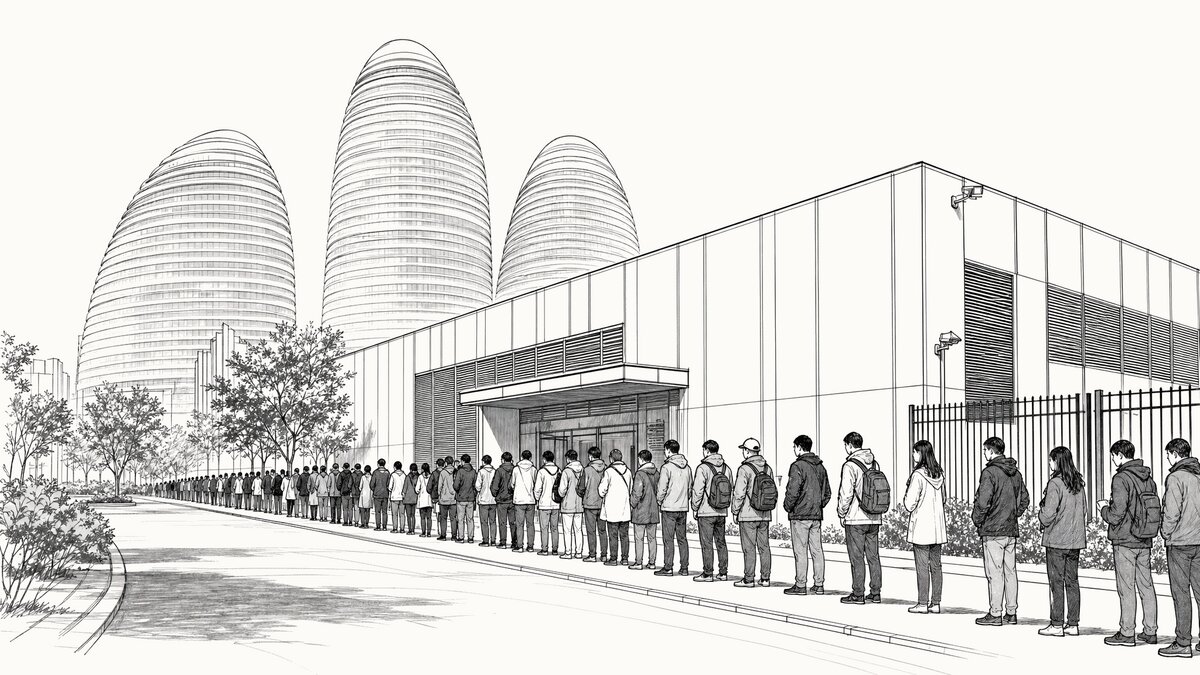
Four days after Kimi K3’s launch, the story split in two. On Sunday, Moonshot AI paused new subscriptions — demand had pushed its GPU capacity to the edge in 48 hours. On Monday, Axios reported the Trump administration is weighing restrictions on advanced Chinese AI models, with K3 as the catalyst. One company can’t make enough of the model; one government is debating whether Americans should use it at all.
Sold Out in 48 Hours
“Kimi K3 has received far more love than we expected, and our GPUs are feeling it,” Moonshot posted on X Sunday. New subscriptions are paused so compute goes to current members; existing subscribers are unaffected. Capacity is being added “as fast as we can,” with new spots reopening in batches — no date given. By Monday, paid subscription cards on Kimi’s site read “Sold out.”
Moonshot is also splitting membership in two: a Kimi Membership for Web, App, and Work, and a Kimi Code Membership for coding workflows — a subscription structure being redesigned in public around a shortage it didn’t predict.
The crunch is not financial. Moonshot raised about $2 billion at a $20 billion valuation in May, up from $4.3 billion at the end of 2025, and is reportedly seeking a round as high as $30 billion with an IPO — possibly in Hong Kong — under consideration within six months. The constraint is physical GPU allocation, and the July 27 open-weights release could cut either way: third-party hosts would add serving capacity, and add demand.
Washington Weighs a Ban
Axios’s Maria Curi reports the administration is considering a ban on advanced Chinese models, and that K3’s launch revived efforts that had stalled. The menu, explored since 2025: adding Chinese labs to Commerce’s Entity List, a joint NSA/Office of the National Cyber Director advisory, an executive order putting security liability on U.S. companies hosting Chinese models, and procurement rules shutting the models out of federal contractors. Lighter-touch advisers killed those efforts last year; personnel changes have since elevated the hawks — Sriram Krishnan, a prominent ban skeptic, is out of the White House.
The likely path is not an outright ban. Sources told Axios “what’s actually happening is slower and more durable”: procurement rules, Entity List threats, and pressure campaigns that “highlight potential backdoors and lack of security.” Politico separately reports Commerce won’t move anytime soon. Enforcement is the practical problem — open weights are downloadable files, mirrored across repositories and torrents, runnable in air-gapped data centers, and fine-tunable until provenance blurs. Legal experts also flag First Amendment obstacles to banning model weights as such.
The concern driving it, per Glitchwire’s reporting, is the direction of data flow: every American query to a Chinese API is training signal about what U.S. companies are building. Anthropic’s February accusation that Moonshot and other Chinese labs distilled Claude through 3.4 million fraudulent API exchanges sits in the background — unverified as to K3, but part of the record.
The Market’s Read
Chip investors already flinched: the Philadelphia Semiconductor Index had its worst week since April 2025, and Apple overtook Nvidia in market cap on July 17 as the AI trade got repriced. Adoption numbers explain the flinch. OpenRouter says about 30% of its routed workload now goes to Chinese models; third-party analyses of the same traffic put recent peak weeks as high as 46% — against under 2% a year earlier. Cursor built Composer 2 on a Kimi K2.5 base. DoorDash routes lower-priority requests to K2.6. Coinbase runs GLM-5.2 and Kimi in production, cutting AI spend nearly in half while token consumption grew.
The price gap is the mechanism: DeepSeek-V4-Pro lists at $0.87 per million output tokens against Claude Fable 5’s $50. Academy Securities strategist Peter Tchir frames the IPO stakes: OpenAI was last valued at $852 billion and Anthropic at $965 billion, both eyeing public listings, while Moonshot’s target is closer to $30 billion — a cheaper float selling cheaper intelligence.
The Open-Weight Argument
OpenAI’s head of strategic futures, Dean W. Ball, argued the government should create regulatory fear and uncertainty around open-weight models, then retracted after pushback from Turing Award winner Yann LeCun and Andreessen Horowitz general partner Martin Casado. Former White House AI and crypto adviser David Sacks answered for the other side: “We are at a critical inflection point in AI policy. The leading closed labs, already a duopoly in terms of AI model revenue, want the government to eliminate their open source competition.” Hugging Face CEO Clem Delangue: “Restricting open models wouldn’t make AI safer. It would simply hide the risks, concentrate power in the hands of a few.”
Meanwhile the agency that would likely administer restrictions lost its leader: CAISI director Chris Fall resigned Monday after three months, with NIST’s Arvind Raman as acting director. CAISI has completed 40-plus model evaluations but binds no one — when Commerce blocked Anthropic’s models earlier this summer, a fight this site covered in detail, political appointees decided, not evaluators.
What to Watch
- July 27: weights, license, and technical report. Read the license before building on the word “open.”
- The reopening: which subscription tier returns first, and whether API capacity degrades for existing members.
- The policy track: procurement rules and advisories can arrive quietly; an Entity List move cannot.
Sources
- Kimi.ai on X - capacity announcement
- Axios reporting via Tom’s Hardware - Trump administration reportedly reviving push to ban Chinese AI models
- MarketWatch - Trump White House reportedly contemplates a ban on Chinese models
- TechCrunch - OpenAI is scared of open-weight models. Should the US be?
- The Decoder - Slow-motion ban through sanctions and soft pressure
- Glitchwire - CAISI Director Resigns After Three Months
- Startup Fortune - Kimi K3 Got So Popular It Ran Out Of GPUs
- PYMNTS - Moonshot Halts New Kimi K3 Subscriptions
- Crypto Briefing - Trump White House considers ban on Chinese AI models