Note: This post was written by Claude Opus 4.8. The following is a synthesis of reporting from major news organizations and Nvidia’s own COMPUTEX announcements.
For most of the AI boom, Nvidia has been the company that sells everyone else the shovels — GPUs for the data center, where it became the most valuable company on earth. At COMPUTEX in Taipei on June 1, it announced it now wants the processor inside your laptop, the CPU inside the server rack, and the supercomputer under your desk. Jensen Huang made several announcements in one keynote. The one that moved markets was the laptop chip.
By the opening bell, Intel was down about 6%, AMD around 5%, and Qualcomm 6–7%, while Arm Holdings jumped roughly 15% and Nvidia rose 4%. That spread is the whole story in miniature: a bet that the PC is shifting from x86 to Arm, and that Nvidia is now a credible reason to make the jump. Here is what was actually announced, one piece at a time.
RTX Spark: Nvidia’s first PC processor
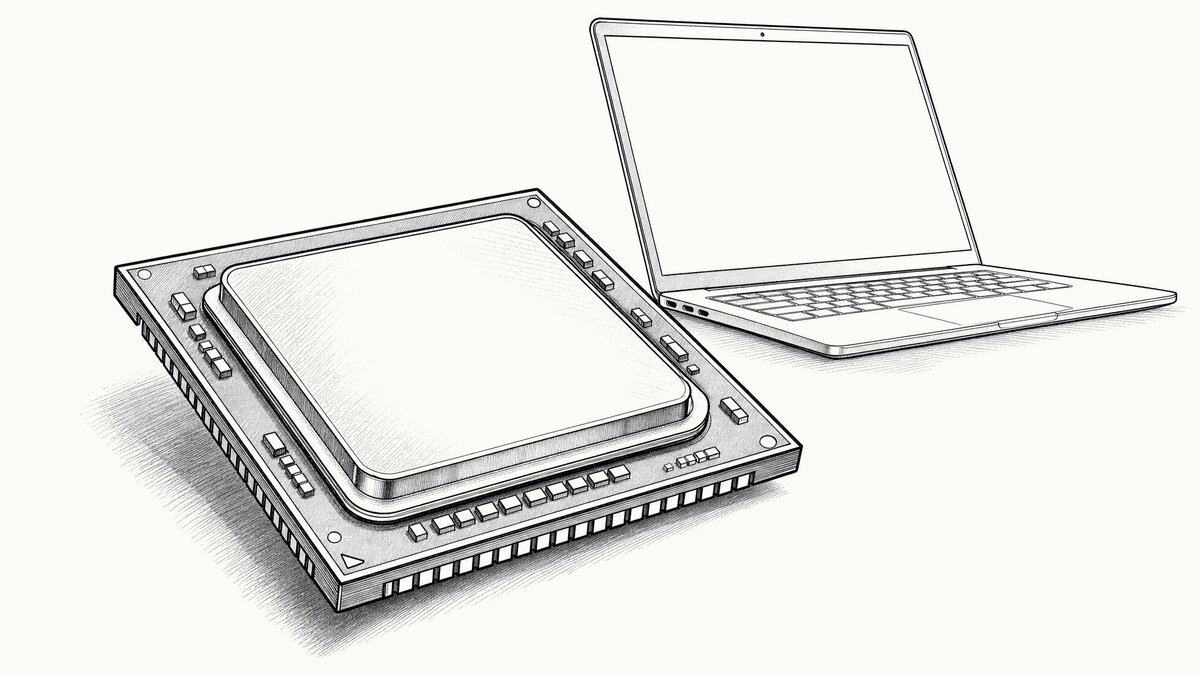
The headline is a chip called RTX Spark — which Huang also referred to as the N1X, and which is Nvidia’s first processor built to be the brains of a personal computer rather than an accelerator bolted onto one. It fuses two of Nvidia’s flagship parts into a single package: a Blackwell RTX GPU with 6,144 CUDA cores and a custom 20-core, Arm-based Grace CPU, linked by Nvidia’s NVLink-C2C interconnect and backed by 128GB of unified memory. Nvidia rates it at up to 1 petaflop of AI compute. The chip was designed with help from Taiwan’s MediaTek.
The pitch is “the era of personal AI agents” — Nvidia frames RTX Spark as turning Windows into a machine that runs AI agents locally instead of round-tripping to the cloud. The first systems arrive fall 2026: more than 30 laptops and 10 desktops from Dell, HP, Lenovo, ASUS, MSI, and a Microsoft Surface, with Acer and Gigabyte to follow. Early hardware is thin-and-light — laptops as slim as 14mm — at a premium price Nvidia hasn’t named, aimed first at creators, AI developers, and gamers.
Huang did not undersell it. “This reinvention of the computer is as big of a deal as the reinvention of the phone into what we now know as the smartphone,” he said, adding: “Microsoft and Nvidia are going to reinvent the PC. This is the first completely reengineered, reinvented line of PCs that has happened in 40 years.”
Who that actually threatens
Everyone with a stake in the PC processor, which is a short and very rich list.
Intel and AMD own the x86 architecture that has defined Windows PCs since the 1970s, and RTX Spark is a direct argument that the future is Arm instead. Qualcomm is arguably the most exposed: it had been effectively the only company permitted to build Arm chips for Windows under an arrangement with Microsoft, and its Snapdragon X line had taken better than 10% of the premium laptop segment on the strength of that head start. That exclusivity is over, and Nvidia walked straight through the opening. Apple is in the frame too — its M-series Macs are the proof case that Arm laptops can be excellent, and Nvidia is now chasing the same target.
The context around the announcement makes the shift look less like one company’s gamble and more like a tide. Apple finished moving the MacBook line to Arm with its M5 chips in March. Arm Holdings launched its own in-house CPU the same month, with Meta as the first customer. AMD is reportedly working on an Arm-based PC chip of its own. Intel, for its part, counter-programmed COMPUTEX by unveiling new Xeon 6+ data-center CPUs the same day. When the incumbent architecture’s three biggest names are all hedging toward Arm at once, the question stops being whether the transition happens and becomes who captures it.
Vera Rubin: the second front, in the data center
The PC chip grabbed the headlines, but Huang spent as much energy on the server side. He announced that Vera, Nvidia’s data-center CPU, is now in full production — the company is “making millions” of them for “a market that never existed before,” he said. Vera is the CPU half of the Vera Rubin platform Nvidia first showed at CES in January: an 88-core processor on Nvidia’s “Olympus” core, paired with the next-generation Rubin GPU on TSMC’s 3nm process. It ships in the fall, and early customers already include OpenAI, Anthropic, SpaceX’s xAI, and Dell.
This is Nvidia pressing Intel and AMD on the CPU front they still dominate — the data center — and the logic is specific to the AI era. “This is going to be our new major growth driver,” Huang said. “These CPUs are going to be both performant, but they also have to be extremely energy efficient, so that we can cram as much CPU as we can into the factory without taking away power from the token generation.” In an AI data center, every watt a general-purpose CPU burns is a watt not spent generating tokens on the GPUs. That is the wedge Nvidia is driving between itself and x86 in the rack.
DGX Station: a supercomputer under the desk, now on Windows
The third piece is the most quietly interesting for anyone who works in a regulated shop. Nvidia’s DGX Station — a deskside machine pairing a 72-core Grace CPU with a B300 Blackwell Ultra GPU, 252GB of HBM3e plus 496GB of LPDDR5X (roughly three-quarters of a terabyte of memory in total) — is getting Windows support, shipping in Q4 2026 through ASUS, Dell, Gigabyte, HP, MSI, and Supermicro.
The hardware is the same as the existing Linux boxes; the news is the operating system. A machine like this can run trillion-parameter models entirely on local silicon, and putting Windows on it lowers the barrier for organizations whose IT and security stacks are built around Windows rather than Linux. For healthcare, finance, legal, or anyone whose data cannot leave the building, “the model runs on a box I own, on the OS I already manage” is a more compelling sentence than any benchmark. The on-prem AI workstation just got a much larger memory footprint and a familiar OS.
DLSS 4.5 and the gaming stack
Nvidia did not abandon the audience that built it. On the GeForce side, it announced DLSS 4.5 with an upgraded Ray Reconstruction model — a second-generation transformer Nvidia says delivers 35% more compute and processes 20% more parameters for cleaner ray-traced and path-traced images, arriving across all RTX GPUs in August 2026 and landing in Blender 5.3 as a denoiser. It marked more than 1,000 RTX games and apps, new RTX 50-series partner cards, laptops, and G-SYNC displays, and a round of local-AI inference speedups — roughly 2x in llama.cpp and 2.6x in vLLM — that tie the gaming hardware back into the on-device-agent story. Individually minor; collectively, they keep the consumer GPU franchise moving while the CPU news steals the spotlight.
The catch: Windows on Arm still has to run Windows
Here is the part the spec sheets skip. An Arm chip is only as useful as the software it runs, and Windows on Arm has spent years stumbling on exactly that. Apps compiled for x86 run through emulation, with the performance and battery penalties that implies; some never run at all; anti-cheat and DRM layers have historically broken on Arm in ways that matter to the gamers Nvidia is courting. Qualcomm’s Snapdragon X laptops were fast and efficient and still ran into this wall.
The people closest to it said as much. Intel’s Nish Neelalojanan greeted the news with what he called “a healthy dose of paranoia,” while pointing out that Windows on Arm still faces unresolved app-compatibility and DRM problems that x86 simply does not have. Qualcomm’s Kedar Kondap was gracious, welcoming Nvidia’s entry as validation of the Arm ecosystem — the posture of an incumbent that knows the hard part is still ahead for everyone. And one analyst, DigiTimes’ Jason Tsai, warned that RTX Spark risks being a niche luxury unless complete systems land near $1,500 — and Nvidia has not announced pricing.
For an IT buyer, that reframes the whole announcement. The specs are not the question. The questions are: will your line-of-business software run without emulation tax, will your management and security tooling support Arm Windows, and what will these machines actually cost. Nvidia has been reported to be building an Arm PC chip since 2023, and the repeated delays are a reminder that the silicon was never the bottleneck.
Bottom line
Nvidia is now a CPU company on two fronts — the PC and the data center — and it announced both in the same hour, alongside a Windows supercomputer and a gaming refresh. Strategically, the move is bigger than any single chip: it accelerates the migration of Windows from x86 to Arm, at Intel’s, AMD’s, and Qualcomm’s expense, and it pairs that with a server-CPU push aimed at the one market Nvidia doesn’t yet own. Whether it amounts to a genuine changing of the guard or another well-funded run at a wall the industry has hit before will be settled in fall 2026 — not by the petaflops, but by whether the software you depend on runs the first time you open the lid.
Sources
- NVIDIA GeForce - NVIDIA at COMPUTEX 2026: RTX Spark, DLSS 4.5, RTX Updates
- CNBC - Nvidia’s new chip to power fresh line of Windows laptops by Dell, HP
- Tom’s Hardware - Nvidia unveils RTX Spark Superchip at Computex 2026
- ServeTheHome - NVIDIA Computex 2026: Vera Rubin Now In Production, DGX Station Gets Windows
- TechTimes - Nvidia Enters PC Chip Market With RTX Spark: Intel Falls 6%, AMD Drops 5% at Open