Robert wrote this post with the assistance of Claude Fable 5.1.
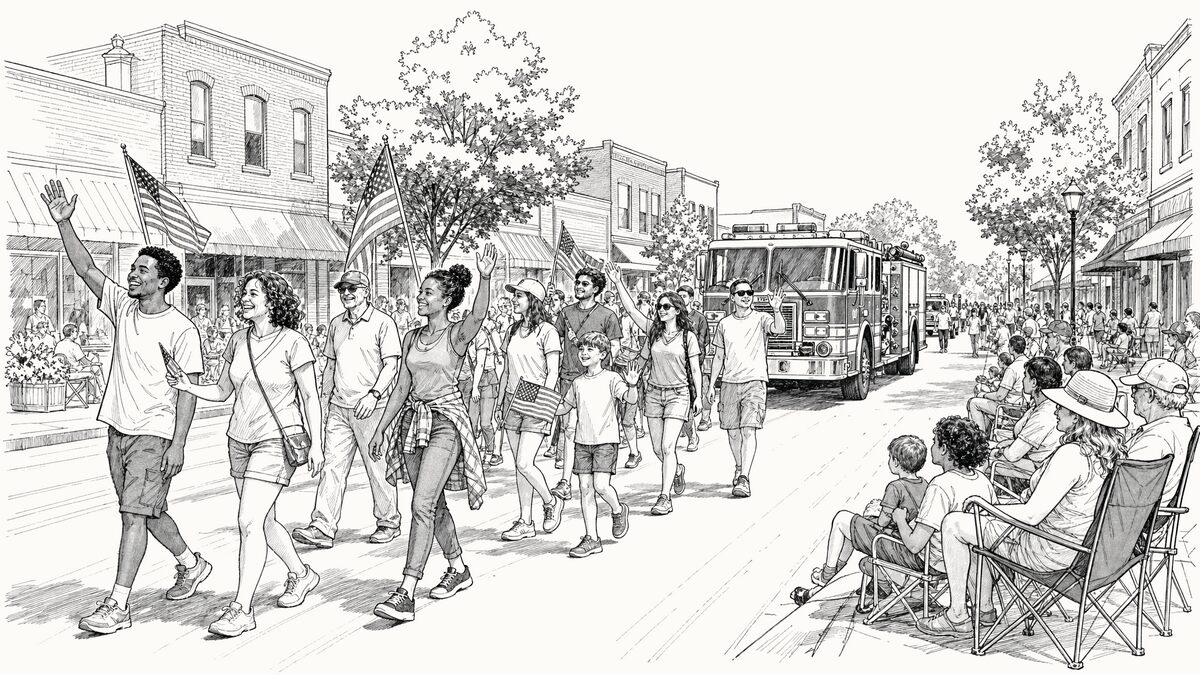
Labor Day began as a parade. On September 5, 1882, New York’s Central Labor Union marched through the city to show, in the words of the original proposal, “the strength and esprit de corps of the trade and labor organizations,” then held a festival for workers and their families. Oregon made it a state holiday in February 1887. In June 1894, with the Pullman Strike under way, President Cleveland signed the law fixing the first Monday in September as a national holiday. The Department of Labor still defines it as “an annual celebration of the social and economic achievements of American workers.”
The holiday honors work, and the question hanging over work in 2026 is what these tools are doing to it. What follows is not a forecast. It is what one weekend looked like.
Four Models in Three Days
The pace has picked up again. In the first three days of September, four new models arrived and were covered here: Claude Fable 5.1 on the 1st, Gemini 3.8 Flash and Meta’s Muse Spark 1.3 on the 2nd, and GPT-6 Astra on the 3rd. Everything seems to be upgrading at once. The last time it felt this way was the second week of August, when Muse Spark 1.2, Qwen 3.8 Max, Grok 4.6, and Gemini 3.7 Flash landed within ten days of one another. Keeping current with the releases has become a second job, and it is one reason I rotate among the models rather than settle on one.
A Website on Saturday
I like mechanical watches, and I set them the traditional way. Pull the crown out and, on a movement that hacks, the seconds hand stops. Set the hands a minute ahead, wait for a trusted clock to reach the top of the hour, and push the crown in at that instant so the seconds hand starts in step with it. The difficult part was never the watch. It was finding a trustworthy time source where I could anticipate the arrival of the next minute. A cell phone’s clock typically shows minutes, not seconds, so it gives no warning of when the next one is coming. Searching for a source that does turned up sites that had gone dark or pages so laden with ads that they were slow to load.
So on Saturday I asked Claude Fable 5.1 to build one: syncmywatch.com. It was not a one-shot request. I front-loaded the prompt with what I wanted and asked the model to interview me on anything unclear before writing code. It produced a plan, I approved it, and the first version was live about 45 minutes after the plan was committed. Version 1.0 was declared that same afternoon. The page draws a watch whose hands show the correct time for the visitor’s zone, takes that time from the nearest CloudFront edge rather than the visitor’s own computer (measured within about ten milliseconds of NTP), offers a second zone on a GMT hand, and lists each manufacturer’s hours during which the date should not be set. The seconds hand sweeps continuously like a mechanical movement’s does. No framework, no ads, no build step.
Its audience may never grow beyond me. It is still more useful than anything a search engine has handed me, and it demonstrates something about the economics: building a site or an application for a single user is now reasonable. My Claude plan costs less than $7 a day, and this took a fraction of one day’s allowance.
A VPN Ticket on Sunday
The professional example arrived as an IT support ticket on Sunday. A physician could reach the internet but none of our clinical applications over the company VPN, which matters when she is on call. I asked OpenAI’s GPT-6 Astra for a PowerShell script to collect extensive diagnostic information from the machine. The output pointed to the root cause. A second script corrected it, and the ticket was closed.
It was not instant. The doctor went in to the office while I worked on it. But the session went straight to the problem and straight to the fix, on an issue obscure enough that not long ago it might have taken much longer to identify and ended with a decision to wipe and reload the machine. AI materially reduced the workload in this case: two scripts, one diagnosis, and no rebuild. I mention this example not for its novelty but for its commonality. Time savings of this kind are now a near-daily occurrence.
Eighteen Months Ago
A year and a half ago I wrote PowerShell with AI assistance by copying and pasting between a chat window and local files. A working script could take twenty revisions and two hours, and anything much past 200 lines was impractical. Today a model writes the script, validates it, and hands it over in one pass, and it usually works on the first attempt, as Sunday’s did.
What the Numbers Say About Work
My examples are small. The labor question is not.
The perception first. I see a steady stream of posts on Reddit from people laid off from technology jobs, and a recurring theme is that finding comparable work takes far longer than it once did. I hold a version of that view myself. Even as I use these tools in virtually everything I do, I assume they could one day make me obsolete, and that I may currently be working the best job I will ever have.
Then the numbers. In aggregate, widespread disruption has not arrived. Friday’s jobs report showed payrolls up 162,000 and unemployment steady at 4.1 percent. Stanford’s Digital Economy Lab, working from ADP payroll records, wrote in August that “we do not see widespread, economy-wide job displacement associated with AI,” and New York Fed economists found “little indication of a distinct AI-driven decline in labor demand” in job postings.
A word on those payroll numbers, because I have shared the suspicion that every jobs report gets written down a couple of months later. Each month’s figure is revised twice as late employer reports arrive and seasonal factors are recalculated, then benchmarked every February against unemployment-insurance tax records. Last year the revisions ran hard in one direction: the August 2025 report marked May and June down by a combined 258,000, which cost the BLS commissioner her job the same day, and the annual benchmark, finalized in February, lowered the March 2025 job count by 898,000, or 0.6 percent, roughly three times the average benchmark revision of the past decade. Cleveland Fed economists concluded in June that recent benchmark revisions were elevated but showed “no clear sign that a structural break has occurred.” This year has been mixed. The July report cut May and June by a combined 103,000; Friday’s report added 55,000 back to June and July, turning July’s reported loss into a gain. The revisions are real, but they are not a one-way ratchet.
The exception is the entry ramp. The same Stanford study puts employment among 22-to-25-year-olds in highly AI-exposed occupations about 19 percent below where it would be had it kept pace with their less-exposed peers, a gap that “appears to operate primarily through reduced hiring of young workers rather than increased separations.” Experienced workers in those occupations show no comparable gap. Recent college graduates ended the second quarter at 5.6 percent unemployment and 42 percent underemployment.
Employers have started saying the word out loud. Challenger, Gray & Christmas reports that AI was the leading stated reason for job cuts every month from March through July, and that it has been cited in 116,175 cuts this year, more than double all of 2025. Total cuts are down 41 percent from last year, though, hiring plans are up 37 percent, and in August AI slipped to fourth place. Andy Challenger’s summary in May: “The open question isn’t whether AI changes the workforce, but how fast.”
The people building the models have softened their forecasts. In May 2025, Anthropic’s Dario Amodei told Axios that AI could eliminate half of entry-level white-collar jobs within five years. This May he described a different mechanism: “If you automate 90% of the job, then everyone does the 10% of the job. And the 10% kind of expands to be 100% of what people do and kind of 10xs their productivity.” OpenAI’s Sam Altman said on May 26 that “I thought there would have been more impact on entry-level white-collar jobs being eliminated by now than has actually happened,” adding, “I’m delighted to be wrong about this.”
What is coming is longer leashes. Goldman Sachs Research’s base case has 6 to 7 percent of workers displaced over a roughly ten-year adoption period, adding about 0.6 points to unemployment if the transition is gradual and more if it is front-loaded, partly offset by the 216,000 construction jobs the data-center buildout has added since 2022. The four models released this month were all sold on the same capability, sustaining a multi-step assignment with less human intervention, which is the capability my two weekend examples used. Washington has not decided whether to count any of this: the AI-Related Job Impacts Clarity Act, which would require large employers to report AI-related layoffs to the Labor Department, has sat in a Senate committee since November.
What I Can Say
I am not in a position to predict where this goes. Most of my time is spent on the present, and on responsibilities that have little or nothing to do with AI. But as a regular user of these models and the coding agents built on them, I can only marvel at the weeks when expectations reset across the board. This was one of them.
This site published its first post on January 1, 2026, and this is post 301. I meant to do something special to mark 300, but we breezed right past it. In a year as demanding as this one has been, that number is only possible with AI. What changed this week was not the work. It was how much of it one person could finish. The measurements above describe the same thing at national scale: the work is still there, the tools are taking longer stretches of it, and the people feeling that first are the ones trying to get their first job, or to get back in after a layoff. Labor Day was created to celebrate what workers achieve, and this year there is plenty to point to. The harder question is who gets to start.
Sources
- U.S. Department of Labor - History of Labor Day
- Bureau of Labor Statistics - The Employment Situation, August 2026
- Bureau of Labor Statistics - CES National Benchmark Article, March 2025 Benchmark
- Bureau of Labor Statistics - The Employment Situation, July 2026
- The Hill - Stunning revisions show US added 258K fewer jobs than first reported
- CNBC - Trump fires commissioner of labor statistics after weaker-than-expected jobs figures slam markets
- Federal Reserve Bank of Cleveland - BLS Benchmark Revisions: Is This Time Different?
- Stanford Digital Economy Lab - No Widespread Displacement, but the AI Employment Gap for Young Workers Has Widened to 19%
- Stanford Digital Economy Lab - Canaries in the Coal Mine? Six Facts about the Recent Employment Effects of Artificial Intelligence (August 2026 revision)
- Federal Reserve Bank of New York - Do Job Postings Show Early Labor-Market Effects of AI?
- Federal Reserve Bank of New York - The Labor Market for Recent College Graduates
- Challenger, Gray & Christmas - Job Cut Announcement Report, May 2026
- Challenger, Gray & Christmas - August Job Cuts Up 58%; Consumer Products, Food Lead
- Goldman Sachs - How Will AI Affect the US Labor Market?
- Axios - Behind the Curtain: A white-collar bloodbath
- Fortune - Dario Amodei spent last year warning of an AI white-collar bloodbath. Now he’s changing the narrative
- Fortune - Sam Altman and Dario Amodei are both walking back their AI jobs apocalypse prophecies as they eye blockbuster IPOs
- Congress.gov - S.3108, AI-Related Job Impacts Clarity Act