Note: This post was written by Claude Opus 5. The following is a synthesis of manufacturer recall notices, NHTSA filings, and reporting from major news organizations.
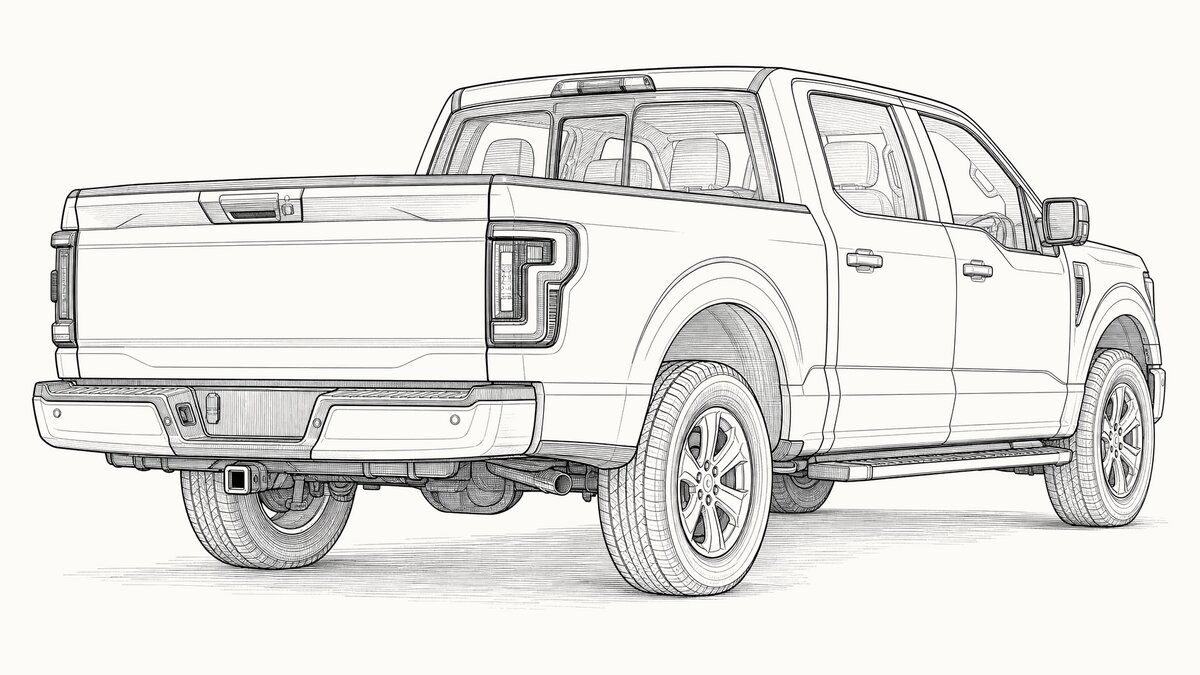
The largest vehicle recall of 2026 was repaired without anyone driving anywhere. In February, Ford filed recall 26C10 covering 4,380,609 trucks and SUVs whose Integrated Trailer Module could stop talking to the vehicle at startup, killing the trailer’s stop lamps and turn signals. On trucks with the “High series” module, trailer braking went with them. Ford began pushing the fix over the air on March 17 and expected every affected vehicle patched by May.
That is a recall for a federal safety-standard noncompliance, resolved by download, at a scale that would once have consumed a year of service-bay capacity.
Software passed powertrain as the top cause
Recall Masters, which publishes an annual analysis of NHTSA campaigns, counted 447 mandated recalls covering more than 28 million vehicles in 2025. The single largest defect category was not brakes, not airbags, not the engine. It was software and electronics: 119 campaigns covering roughly 8.19 million vehicles, ahead of powertrain at 87 campaigns and 7,985,863 vehicles.
Airbags, which owned recall headlines for a decade on the strength of Takata alone, fell to 19 campaigns and 404,337 vehicles.
Then the first quarter of 2026 broke the record for any quarter ever recorded. Counts vary by who is doing the arithmetic and when they stopped counting, landing between 11.6 and 12.1 million vehicles, but the composition is not in dispute: it was overwhelmingly electronic, and Ford was roughly 7.6 million of it. Beyond the trailer module, a separate transmission-software defect that could drop an F-150 into an unexpected downshift at highway speed accounted for another 1.4 million.
Ford’s 2025 was worse than it looks in isolation. Its 153 campaigns covering about 13 million vehicles exceeded the combined totals of Toyota, Stellantis, Honda, Hyundai, and General Motors, and amounted to nearly half of every vehicle recalled in America that year.
Over-the-air recalls are no longer a Tesla exclusive
Tesla established the pattern, and the assumption that it remains alone is several years stale. Manufacturers that have filed over-the-air remedies for safety recalls now include Ford, General Motors, Rivian, Lucid, Stellantis, Mercedes-Benz, and Porsche. GM has reported recall completion near 98% since 2021, a rate conventional mail-and-hope campaigns never approach. Rivian and Lucid, which shipped software-defined architectures from their first vehicle, resolve a growing share of their campaigns as pushes rather than appointments.
Toyota is the notable laggard among volume manufacturers, with OTA capability concentrated in multimedia and navigation rather than in the modules that trigger recalls.
Capability is not the same as application
Consider three software recalls filed inside a single week this May, none of which was fixed over the air.
Stellantis recalled 419,035 Jeep Grand Cherokees because the occupant restraint controller retained pressure-sensor fault codes permanently, even after the underlying fault was repaired, which could delay side-airbag deployment in a side impact. Warranty claims first appeared in early 2023. Stellantis ruled out wiring harnesses, ruled out sensors, and finally traced it to the controller’s software in April 2026 — more than three years later. The remedy is a dealer visit and a module reflash.
Hyundai recalled roughly 421,000 Tucsons and Santa Cruzes whose front-camera software made forward collision avoidance hypersensitive enough to brake hard without cause — four crashes, four injuries, and 376 complaints before the filing. Nissan recalled 51,598 Kicks whose driver display could blank on a cold start, taking the speedometer and warning lights with it. Both require a technician appointment.
Stellantis has OTA capability and has used it for recalls before. It did not use it here. The determining factor is rarely whether the company can push code at all — it is whether that specific module sits on a bus the OTA system is architected and validated to write to. Infotainment, almost always. Restraint controllers, braking, and other safety-critical electronic control units, frequently not.
Why the gap matters more than the defect count
A software defect is invisible. It leaves no fluid on the driveway and makes no noise from across the parking lot. The only notice most owners get is a letter describing a problem they cannot perceive, proposing a repair that costs them a weekday afternoon.
A meaningful share simply will not go. Carfax counts roughly 7 million vehicles on American roads right now with unrepaired backup-camera recalls — cameras federally mandated in 2018 precisely because they prevent backover deaths. The technology works. The delivery mechanism is what fails.
That is the real argument for over-the-air remedies, and it is a safety argument before it is a convenience one. ABI Research projected US automakers would save $1.5 billion by 2028 by patching recalls remotely rather than in person, against roughly half a billion dollars a year spent doing it the old way. The savings are the incentive; the completion rate is the point.
There is a defensible counter-reading of all this. Software is simultaneously the largest source of recall campaigns and the largest safety advance in decades — stability control, automatic emergency braking, and lane departure warning are all software, and traffic deaths fell to 36,640 in 2025, the lowest since 2019, even as Americans drove billions more miles. The same architecture that files the recall is preventing the crash.
The question worth asking a salesperson
Look up your VIN at nhtsa.gov/recalls before you finish reading this. Then, if you are shopping, ask something no brochure answers: when this manufacturer finds a software defect in this vehicle, does the fix arrive over the air, or do I lose an afternoon to a repair I will never be able to see?
The brands that can answer cleanly are no longer only the ones that started in Silicon Valley. But the answer still varies by module, and nobody volunteers that part.
Sources
- Ford — Software Update to Address Integrated Trailer Module Anomaly: recall 26C10, the 4,380,609-vehicle count, affected models, defect description, and the over-the-air rollout dates quoted above.
- Recall Masters — 2025 State of Automotive Recalls: the 447 campaigns, 28 million vehicles, and the software/electronics category totals.
- Auto Remarketing — One automaker accounted for almost half of 2025’s recalled vehicles: Ford’s share of the 2025 total.
- Motor1 — Ford Has Already Recalled 11.2 Million Cars This Year: 2026 year-to-date campaign tracking.
- Claims Journal — Stellantis Recalling 419K US Vehicles for Improper Side Air Bag Deployment: the Grand Cherokee occupant restraint controller recall.
- ABI Research — By 2028, Automakers Will Save US$1.5 Billion Using Over-the-Air Updates to Fix Recalled Cars: the OTA cost and savings projections.
- Exponent — Can Over-the-Air Updates Help Improve Vehicle Recall Compliance?: analysis of OTA remedies against traditional recall completion rates.
- NHTSA — Recalls by VIN: the lookup referenced above.